After the Storm: The Victorville Roof Check, in Order
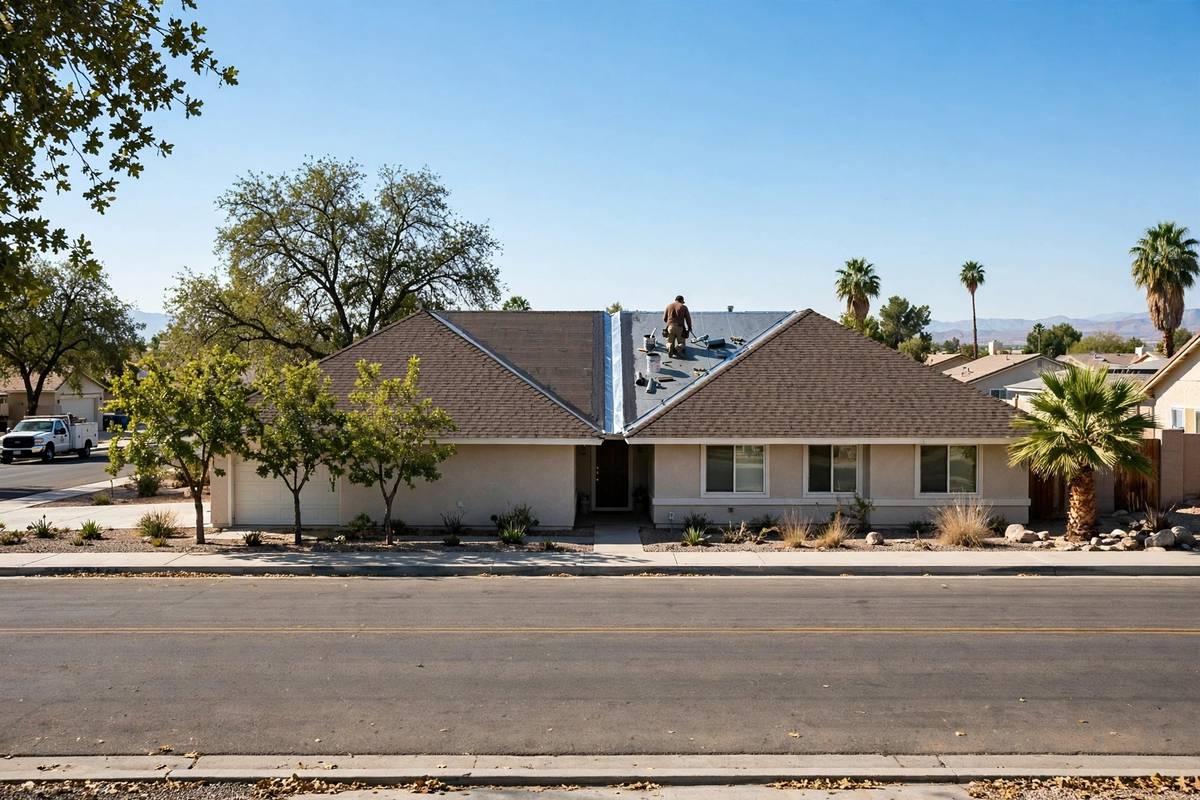
Work from the ground first. Walk the property line with a phone camera: shingles in the yard, debris, dented gutters and vents, and any tree contact, all photographed with the date on the record. From the street, use binoculars or a zoom photo for the slopes; a wet or debris covered roof is not a place for a homeowner in the first day after a storm.
After a Victorville wind event, the ground tells the story first: tile fragments and ridge pieces in the yard name the slope, and a walk around the house reading the tile lines for slips and gaps names the rest. Photograph it all dated, then watch ceilings through the next rain, whenever it comes; in the desert the proof of a wind repair often waits a season for its test, which is exactly why the documentation matters now.
Inside, the check is ceilings and the attic hatch: new stains, a drip line, damp insulation. Note which storm produced them, because leaks surface 12 to 72 hours after an event as trapped water moves, and the claim is filed under the storm date, not the discovery date.
Then decide in order: an open roof or active drip is a tarping call today. Damage you can only see as marks and yard shingles is an inspection this week. Either way, keep the photos and any fallen shingles until the assessment is done; they are evidence, not trash.
Request a callback
Prefer to talk later? Leave your details and an independent local pro will call you back. No charge to you, no obligation.
Bell Mountain Roofing Co is a free referral service. Submitting this form connects you with independent local contractors who provide the work.